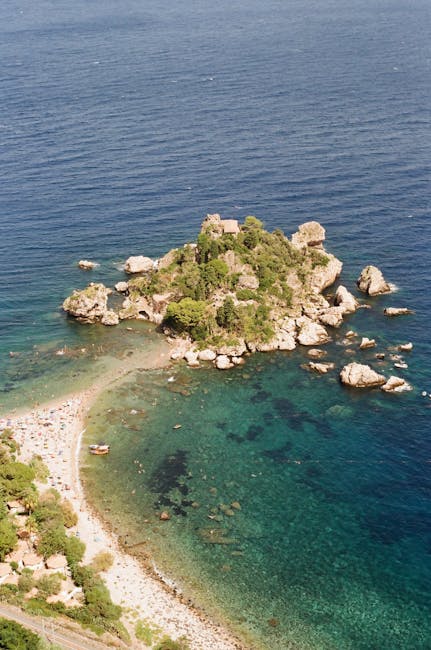






Introduction: Moonrise on Sicily’s east coast — where sea, stone and light meet
The eastern coast of Sicily is a place where geology, history and Mediterranean culture come together to create an ideal natural setting for watching and photographing the moonrise. From the lava cliffs of Etna that drop into the Ionian Sea, to the sheltered bays of Taormina, the baroque ruins of Ortigia in Syracuse and nature reserves like Vendicari, the range of landscapes is visually rich and varied. Watching the moon climb up over this coastline — appearing between church silhouettes, reflecting on the oily surface of the sea, or rising behind a rocky islet — offers incredibly photogenic scenes, but it takes preparation, scouting and respect for the sites.
This article is a complete guide to finding the best vantage points and getting the most out of your moonrise photography along Sicily’s east coast. You’ll find practical details like exact addresses, opening hours, potential fees, technical advice (camera settings, focal lengths, long exposures and tripod use), framing and safety tips, plus local recommendations (parking, accommodation, dining). The goal is to turn a lovely idea into a successful photo night: be there at the right time, with the right gear, solid composition and an understanding of the Moon’s unique light conditions.
Unlike the sun, the moon can show up quite late in the evening — often shortly after sunset for a full moon, or much later depending on the lunar phase and the season. On the east coast the moon can rise behind Etna, emerge behind classical ruins, or climb above islets like Isola Bella — each position radically changes the mood and the camera settings you’ll need. It’s therefore essential to use tools like PhotoPills or The Photographer’s Ephemeris to calculate azimuth, altitude and the exact timing of the moonrise for your chosen spot. Finally, respecting opening hours, reserve rules and local residents’ peace will help you enjoy an aesthetic and responsible experience.
When and how to pinpoint the moonrise: tools, calendar and weather
To accurately locate the moonrise on Sicily’s east coast you need three essential pieces of information: the date and lunar phase, the precise geographic position, and the weather conditions. The moon follows a regular 29.5-day cycle: the full moon (ideal for a large, bright lunar disk) rises roughly at sunset, while the new moon won’t be visible. Waxing and waning crescents appear at varying times. For reliable planning, use specialist apps: PhotoPills (paid but extremely precise), The Photographer’s Ephemeris (TPE) and Stellarium (free and great for understanding celestial paths). These tools will give you the azimuth (direction on the horizon), elevation angle and the exact rise time for a specific GPS point.
Practical tip: choose a permanent landmark (a lighthouse, a tower, a harbour entrance) and enter its GPS coordinates in the app. PhotoPills lets you overlay the moon’s path on a satellite map and shows augmented reality simulations — crucial for predicting whether the moon will rise behind Isola Bella, Etna or the baroque church on Piazza Duomo in Ortigia. TPE also shows golden hour and blue hour windows: these time frames are essential for twilight compositions where the moon stands out against a still-colored sky.
Weather and visibility: eastern Sicily usually enjoys a dry Mediterranean climate, but low clouds or a Scirocco wind can ruin visibility. Check reliable weather services (Meteo.it, IlMeteo.it, Windy.com) within 48 hours of your shoot. Look at cloud cover at different altitudes — a clear horizon can be hazy at 5° altitude, making the moon look diffuse. Bring a low-power headlamp (ideally with a red mode) for moving around at night and a windbreaker depending on the season.
Recommended gear: a sturdy tripod (stable in the wind), a 200–600 mm telephoto for tight lunar close-ups, a 16–35 mm wide-angle to include the moon in a seascape, a remote release or intervalometer, spare batteries (long exposures chew power), and graduated ND filters if you mix moon and urban lights. For focusing, favour manual focus on infinity or a distant object, then stop down slightly (f/8–f/11) to improve sharpness.
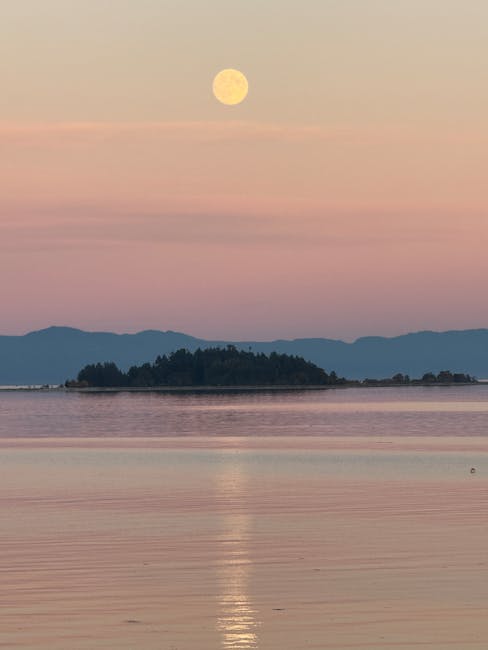
Top spots on the east coast — addresses, hours and practical tips
Sicily’s east coast hides a number of distinct lookout points. Here are concrete locations with addresses, opening hours, fees and logistical tips to prepare your moonrise sessions.
-
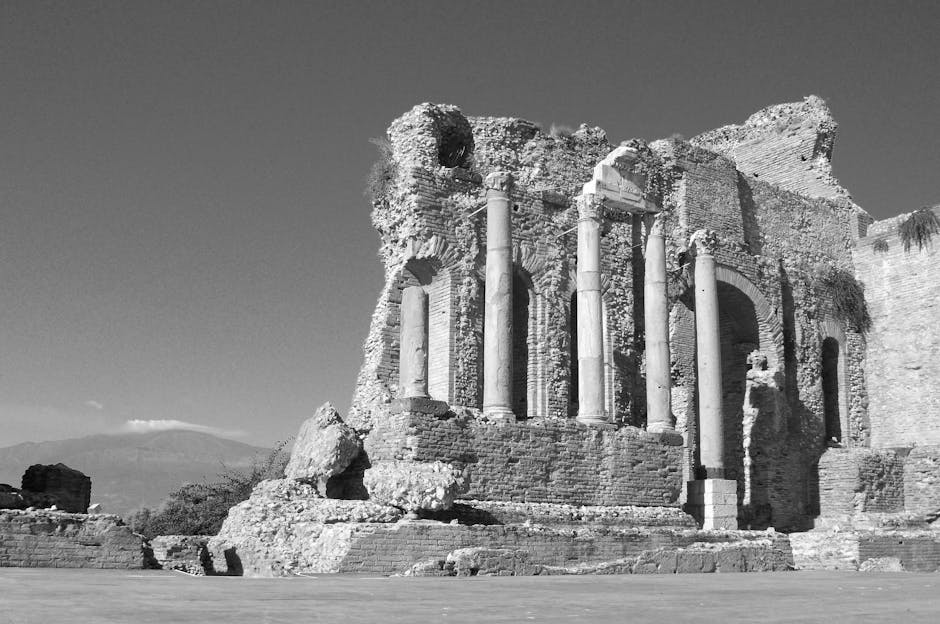
Teatro Antico di Taormina (Teatro Greco)
Address: Piazza Teatro Greco, 98039 Taormina ME, Italy.
Opening hours: generally 9:00–19:00 (varies by season; evening shows possible).
Fees: entry ticket around €10–12 for museum and theatre access (reduced rates for students and seniors).
Description and tips: perched above the bay of Giardini Naxos, this ancient theatre frames the sea and sometimes Etna with its stone arches. For the moonrise, check the exact direction with PhotoPills: the moon can rise between Etna and the bay, creating dramatic backlighting. Arrive at least 90 minutes before sunset to catch the changing light and to get up onto the historic seating. Parking: Parcheggio Porta Messina (Via Luigi Pirandello) or public lots downhill; expect €1.50–2.50 / hour and busy summer evenings with limited spaces.
-
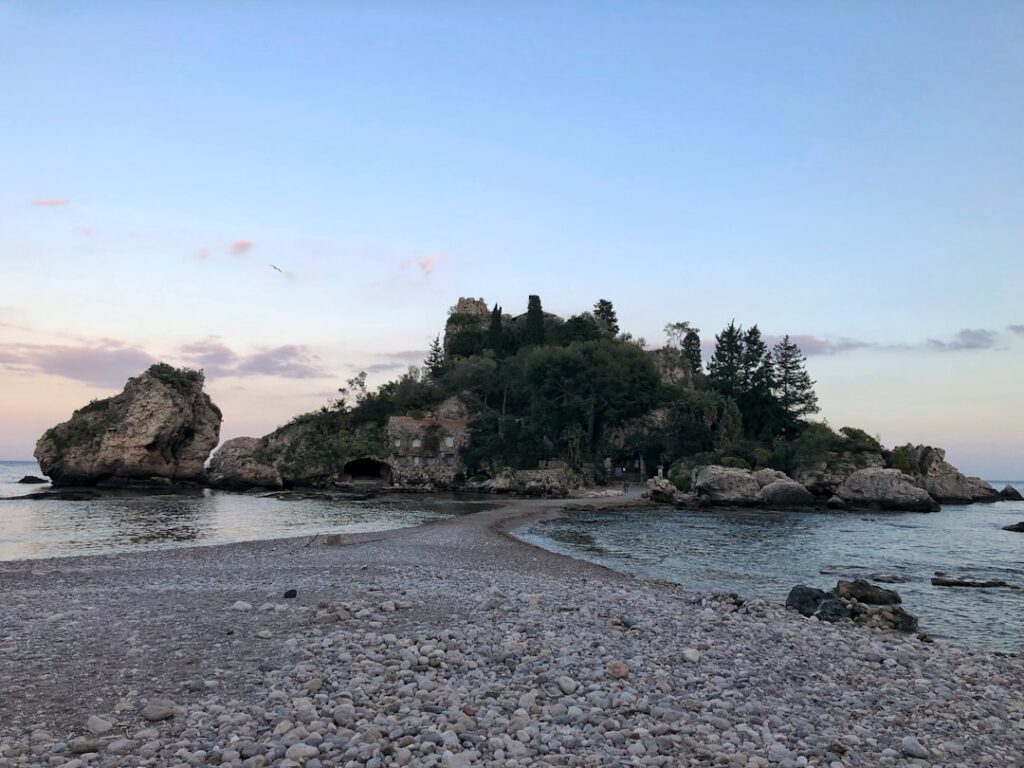
Isola Bella, Taormina
Address: Isola Bella, 98039 Taormina ME, Italy (access from Via Nazionale and the Taormina-Mazzarò cable car).
Opening hours: access to the islet and the beach is generally unrestricted, but the nature reserve may impose seasonal rules (check with Taormina town hall).
Fees: public beach access is free; some boat access or activities are paid (€15–30 for boat tours).
Description and tips: Isola Bella is a picturesque islet connected to shore by a pebble strip; at moonrise the silhouetted islet against the lunar disk is a classic shot. Use a telephoto to “compress” the islet against the moon or a wide-angle to include the coast and the moon’s reflection on the water. Access on foot from the Mazzarò cable car station or via coastal paths. Parking: many paid lots in Taormina (Parcheggio Lumbi, Via Lumbi). Wear non-slip shoes to descend onto the pebble beach.
-
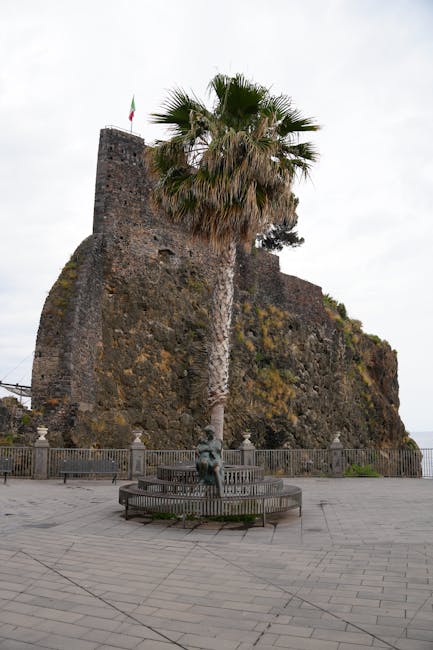
Castello di Aci Castello
Address: Via Castello 27, 95021 Aci Castello CT, Italy.
Opening hours: usually 9:00–13:00 and 15:00–19:00 (varies by season and events).
Fees: museum/fortress entry around €4–6; exterior access is free.
Description and tips: this Norman castle on a basalt promontory offers steep cliffs and rock arches with the open sea beyond. A moon rising behind the castle or illuminating its façade creates an almost otherworldly medieval atmosphere. For the best compositions, scout the small viewpoints along the Lungomare di Aci Trezza promenade and plan your position according to the azimuth. Watch opening hours if you want to go inside; the exterior areas are accessible 24/7 but some paths can be dark — bring a headlamp.
-
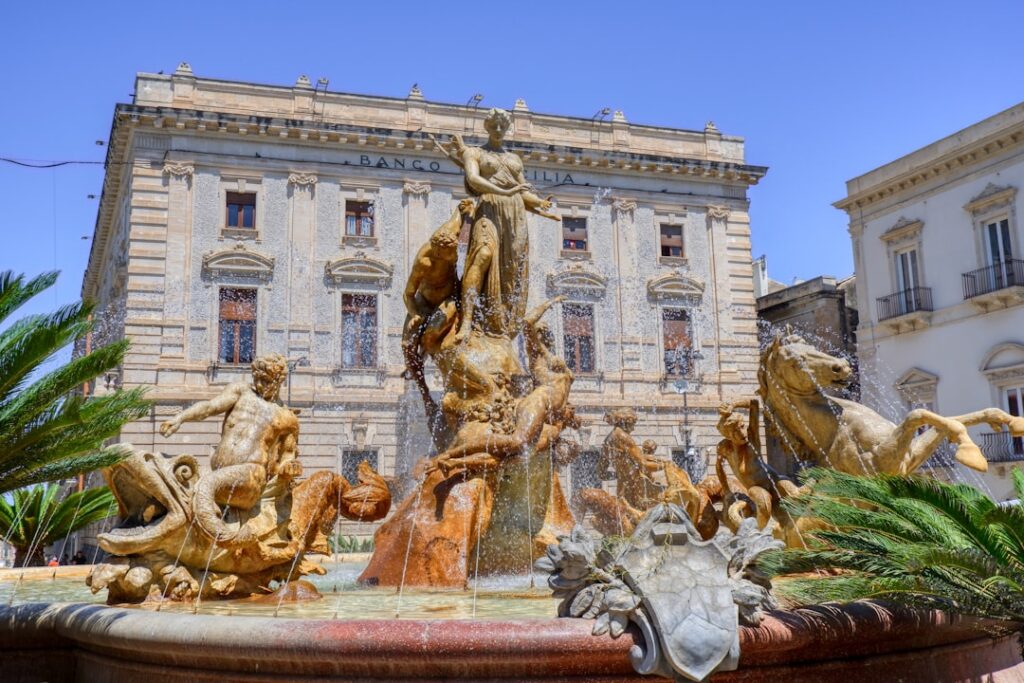
Piazza del Duomo, Ortigia, Siracusa
Address: Piazza Duomo, 96100 Siracusa SR, Italy.
Opening hours: the cathedral (Cattedrale di Siracusa) roughly 9:30–12:30 / 15:30–19:30 (summer hours and services vary).
Fees: cathedral access is free; guided tours and nearby museums €3–6.
Description and tips: Ortigia, the old island of Syracuse, offers baroque streets, the Fountain of Diana and the cathedral that make for striking night compositions where the moon can emphasize sculpted reliefs. The square is paved and often busy: for a full moon the natural light mixes with street lamps — experiment with exposure balance (bracketing recommended). Parking: peripheral lots (Parcheggio Ortea/Marina) with a short walk to the piazza. Favor weekday evenings to avoid crowds.
-
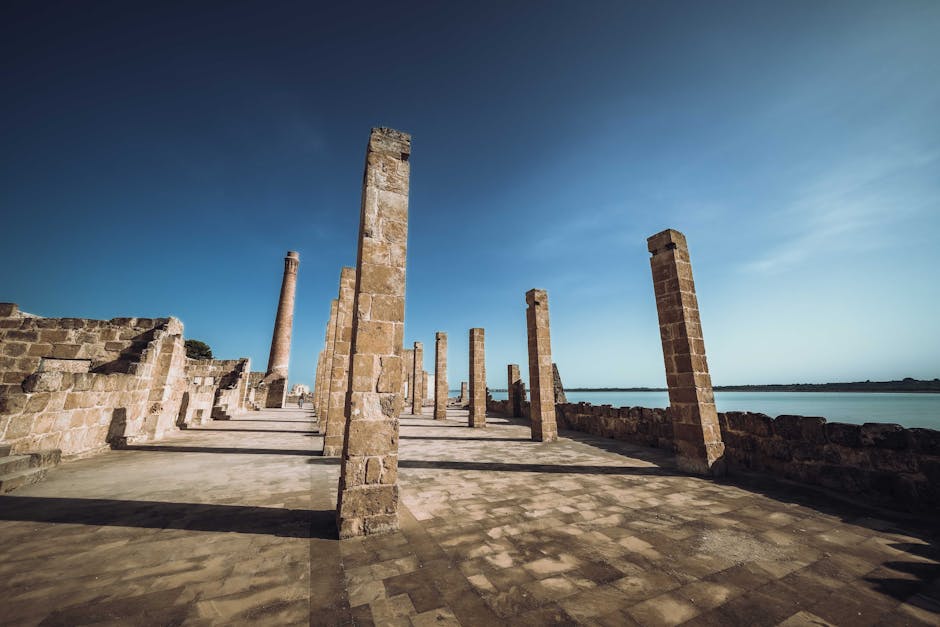
Riserva Naturale Orientata di Vendicari
Address: SP14, 96017 Noto SR, Italy (main entrance near the Tonnara di Vendicari).
Opening hours: generally 8:00–19:00 (variable; some paths are accessible early morning and at dusk).
Fees: free entry; some parking areas may charge (€2–5) and seasonal guided tours are paid (€10–15).
Description and tips: south of Syracuse, Vendicari combines lagoons, beaches and the remains of an old tuna fishery (tonnara). For moonrises, the wide water expanses and dunes provide perfect reflections. Stick to marked trails (wildlife protection) and avoid nesting areas. Ideal for minimalist compositions: the silhouette of an old building (the Tonnara) framed with the moon and marshes in the foreground. Bring water, insect repellent and a light — the reserve is little lit at night.
Shooting techniques: settings, composition and post-processing tips
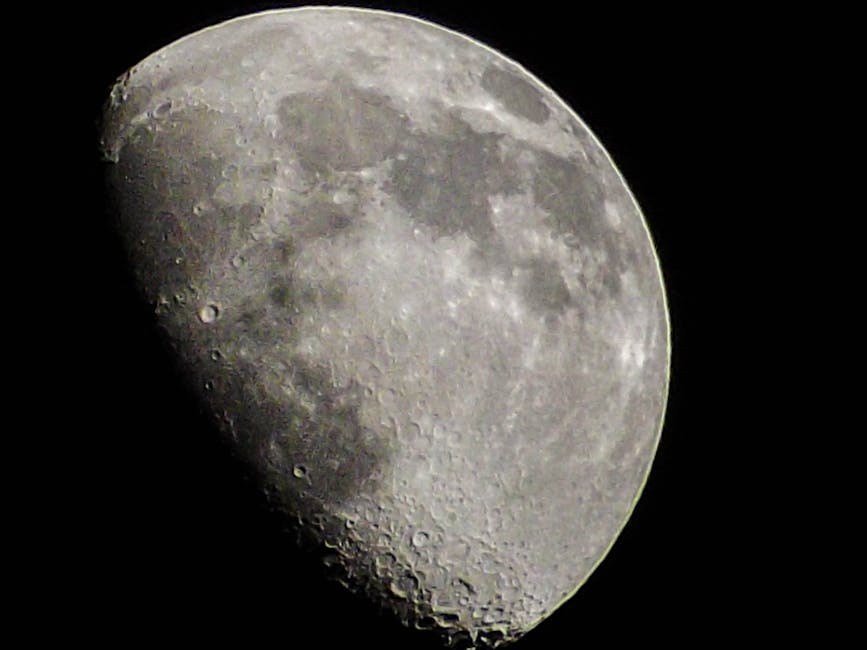
Photographing the moon as it rises is an exercise in balance: the moon is extraordinarily bright compared to a twilight sky, and the human eye often sees more lunar detail than the camera without the right settings. Here are baseline settings for different lenses and goals.
Recommended settings:
- Telephoto (200–600 mm) — lunar close-ups: ISO 100–200, f/8–f/11, shutter 1/125–1/250 s depending on phase and reflectivity. Use the “1/ISO approx.” rule as a starting point to avoid motion blur from Earth’s rotation.
- Wide-angle (16–35 mm) — landscape with the moon: ISO 400–800, f/5.6–f/8, exposures of 1–6 seconds. Use a tripod and remote release; consider double exposures (bracketing) to recover both landscape and lunar detail.
- Modes: prefer manual focus to prevent autofocus hunting in a dark sky. Use live view and digital zoom to check lunar sharpness.
Composition and storytelling: the moon can be a decorative element or the central point in your visual story. Look for foreground elements (boats, rocks, arches, human silhouettes) to give scale. Use telephoto compression to bring the moon closer to a distant subject (for example Isola Bella in front of the lunar disk). For a softer mood, capture the moon during the blue hour — the sky retains deep blue tones while the moon becomes visible.
Post-processing: shoot RAW to maximize highlight recovery on the moon and shadow detail in the landscape. In Lightroom or Capture One: pull down global exposure slightly to preserve lunar texture, increase clarity sparingly, and use local adjustments to sharpen only the moon. For HDR-style compositions (landscape + moon), blend multiple exposures: one exposed for the moon, another for the foreground. Avoid excessive halos and keep a natural white balance — the moon isn’t purely white.
Local practical advice: transport, safety, food and lodging
Getting around safely and efficiently on Sicily’s east coast is as important as choosing the spot. Here are up-to-date, practical details to plan your night sessions.
Transport and access: the region is served by Catania-Fontanarossa Airport (Aeroporto Vincenzo Bellini), address: Via Fontanarossa, 95121 Catania CT. Renting a car is recommended for flexibility: international companies (Avis, Hertz, Europcar) with daily rates roughly €25–60 depending on season. Coastal roads (SS114 between Catania and Taormina, SP18 toward Siracusa) are winding: prefer daytime driving and schedule arrivals before dusk. Parking: previously mentioned lots include Parcheggio Lumbi (Taormina), Parcheggio Ortea (Ortigia), and municipal lots in Aci Castello.
Safety: most sites are safe, but at night some unlit trails can be slippery or rocky. Wear closed, non-slip shoes, carry a red headlamp, wear a reflective vest and avoid leaning over unprotected cliffs. Respect signage in nature reserves (Vendicari) and don’t disturb wildlife.
Food and relaxation: after the shoot, enjoy local cuisine to round out the evening. Examples: Trattoria da Nino, Via Roma 35, Giardini Naxos (seafood dishes, main courses €15–25), Osteria RossoMare, Via Teatro Greco 33, Taormina (advance booking recommended, menus €20–35). In Ortigia try Fratelli Burgio – Mercato (Piazza del Duomo area) for fresh produce and tastings. For a late-night sweet treat, Sicilian granita (€5–7) or cassata (local pastry) are perfect reminders of the island.
Accommodation: pick lodging close to your shooting spot to avoid late returns. Examples: Grand Hotel Timeo, Via Teatro Greco 59, 98039 Taormina (rates €150–300/night depending on season; breakfast included), B&B Il Cortile Di Aci, Via Provinciale 18, 95021 Aci Castello (rates €60–90), Palazzo Liva – Boutique Hotel, Ortigia, Via Vittorio Veneto 15, 96100 Siracusa (rates €120–220). Book ahead in high season (June–September) and check late check-in policies.
Conclusion: plan well, respect the places, and elevate your moonrises in Sicily
Photographing the moonrise on Sicily’s east coast rewards preparation and patience. Iconic sites — Teatro Antico di Taormina, Isola Bella, Castello di Aci Castello, Piazza del Duomo in Ortigia and the Vendicari Reserve — each offer a unique palette of compositions: architectural silhouettes, rocky islets, sea reflections and volcanic backdrops with Etna. To turn a celestial show into a memorable photo series, combine precise scouting (GPS and apps like PhotoPills), a gear checklist (tripod, telephoto, batteries, remote), weather knowledge and mastery of settings (ISO, aperture, shutter) matched to your chosen scene.
Respect the land and local communities: don’t enter protected areas off the trails, leave no trash, limit flash and unnecessary light that can disturb wildlife and residents. Schedule shoots outside peak tourist hours when possible, reserve parking or restaurants in advance and adapt your route to seasonal changes in moonrise timing. Finally, experiment: mix wide-angle for atmosphere and telephoto for lunar detail, try bracketing for natural HDRs and play with marine reflections in the foreground.
Eastern Sicily is an exceptional photographic playground. Each moonrise tells a new story — a silver disk born above an ancient theatre, a glow wrapping a lava castle, a reflection dancing across a nature reserve. By respecting nature, doing thorough scouting and mastering the technical side, you’ll come back with images that move through both beauty and narrative. Happy scouting, expect some sleepless nights, and may the light be with you on Sicily’s east coast.