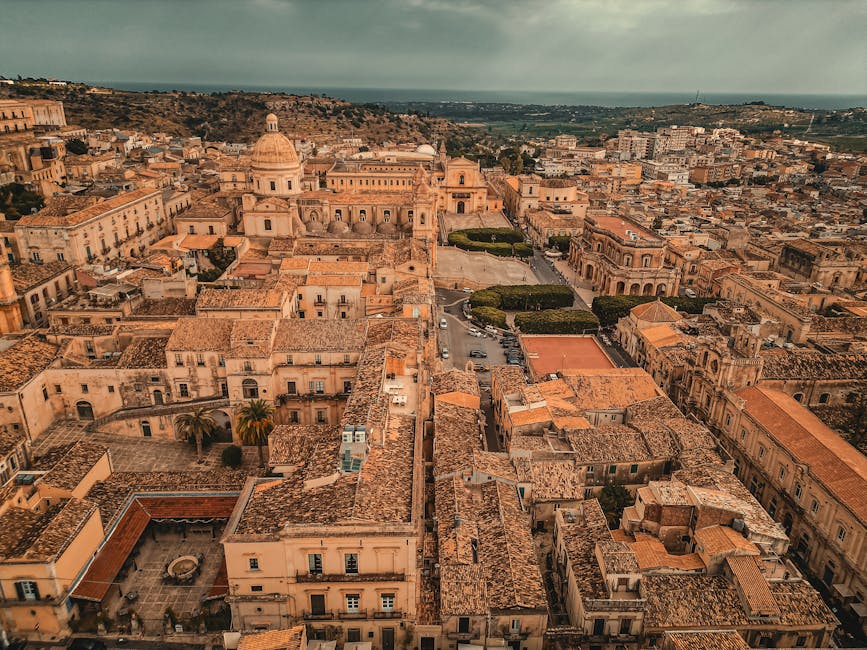






Introduction: Sicily’s Cathedrals — Hidden Treasures That Take Your Breath Away
Sicily is an island that breathes its history: Phoenicians, Greeks, Romans, Byzantines, Arabs, Normans, Spaniards — a layered mix of architectures and cultures that left an extraordinary legacy. Among the most moving witnesses of that past are Sicily’s cathedrals. They’re not just places of worship; they’re living museums where you can read the strata of art, belief and craftsmanship. From the golden splendor of Byzantine mosaics to the stern drama of Baroque façades, each major church tells a unique story often missed by standard tourist routes.
This article offers an immersive exploration of Sicilian cathedrals — not an exhaustive checklist, but a practical, sensory guide for curious travelers. We’ll visit iconic sites like the Cattedrale di Monreale, the Cattedrale di Palermo, the Duomo di Cefalù, the Cattedrale di Siracusa and other, less-expected gems. For each building you’ll find the exact address, opening hours, an indicative entry price, as well as detailed descriptions and local tips: when to come to avoid crowds, which areas not to miss, how to dress, and which nearby artisan or café to choose to extend the experience.
This guide is designed to be useful on the ground: it includes practical details — precise addresses, prices in euros, opening times — while also conveying atmosphere. Picture the low morning light on gold mosaics, the coolness of cloisters where pigeons coo, the solemnity of a Sunday Mass in Sicilian, or the chime of a bell punctuating the square. We’ll also add recommendations for photographers and urban hikers, plus tips for pairing visits with local tastings: cannoli, arancini, granita and a good espresso. Finally, to help you visualize these places, visual markers 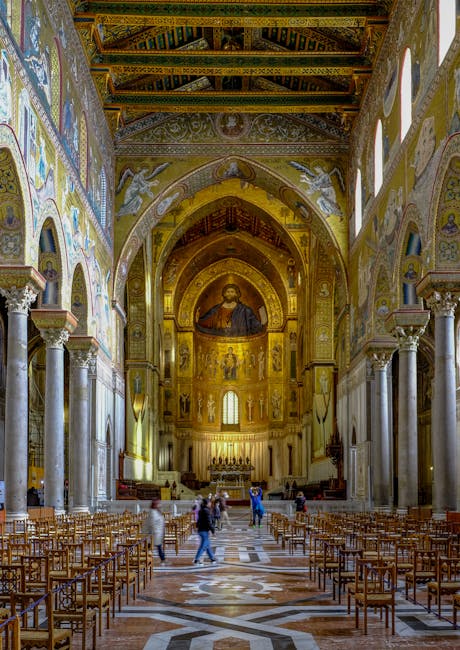 will appear throughout the text.
Cattedrale di Monreale (Duomo di Monreale): the Byzantine Mosaic That Dazzles
Address: Piazza Guglielmo II, 1, 90046 Monreale PA
Opening hours: generally 9:00–17:00 (times vary by season and services; check locally)
Price: combined ticket for cathedral + cloister + museum about €8–€10; cathedral entrance sometimes free for the choir area, but museum areas and the cloister usually require a ticket)
The Cattedrale di Monreale is often described as one of the greatest Norman masterpieces in the Mediterranean. Perched on a hill overlooking the Conca d’Oro and Palermo, it’s famed for its 12th-century Byzantine mosaics that almost entirely cover the interior — gilded biblical scenes that glitter like a starry sky. The iconographic program is vast: Christ Pantocrator dominates the apse, surrounded by episodes from the Old and New Testaments. The marble pavement, richly carved capitals and the contrast between the weight of stone and the delicacy of decoration make it a place to linger, slowly.
Don’t miss the cloister (Chiostro dei Benedettini) attached to the cathedral, with its sculpted marble arches and alternating-column design — a perfect spot for a quiet photo away from the crowds. For photographers, the best times are early morning or late afternoon, when side light reveals the golden reliefs. Practical tips: wear modest clothing to access liturgical areas (shoulders and knees covered); buy the combined ticket to save money and access the cloister and diocesan museum; if arriving by car, park at Piazza Guglielmo II but be aware spaces are limited in high season.
Cattedrale Metropolitana di Palermo and the Cappella Palatina: Mosaics, Rooftops and History
Address: Via Vittorio Emanuele, 1, 90134 Palermo PA
Opening hours: typically 7:00–19:00 for the main church; guided visits and access to the roofs/terraces usually 9:00–17:00 (check specific slots for the roof)
Price: cathedral entry to the sanctuary is free; access to terraces/roof top €8–€12; visit to the Cappella Palatina (inside the Palazzo dei Normanni, a short walk away): combined Palazzo dei Normanni + Cappella Palatina ticket €12–€14)
Palermo Cathedral, dedicated to the Assunta, is a massive structure built and reshaped across centuries. Its architecture mixes Norman, Gothic, Baroque and Neoclassical styles. A short stroll away, the Palazzo dei Normanni houses the Cappella Palatina, the king Roger II’s private chapel, famed for Byzantine mosaics and an intricately inlaid wooden ceiling (muqarnas). For the full Palermo experience, combine a visit to the cathedral, a climb up to the rooftops for panoramic city views, and entry to the Palazzo dei Normanni to see the Cappella Palatina.
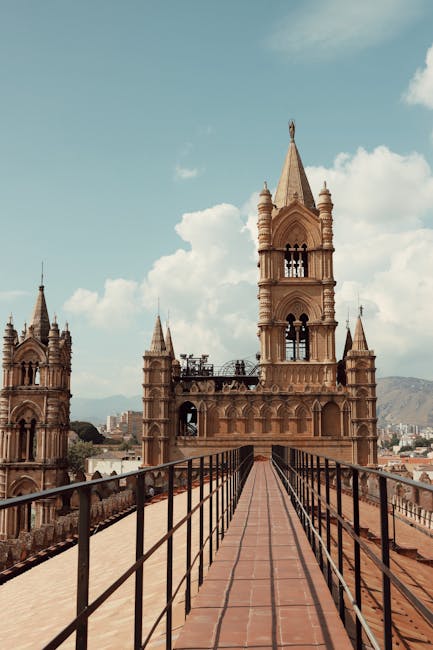
Tips: book a slot to access the cathedral roofs (they’re often limited) because the guided ascent is supervised; sunset views over domes and the harbor are unforgettable. Nearby, wander down Via Maqueda and through the Ballarò market for a lively contrast between the sacred and the popular. Visitors who dislike crowds will prefer early morning hours: between 8:00 and 10:00 the light and atmosphere are ideal. For a musical treat, check listings for organ concerts or choral masses that sometimes take place.
Duomo di Cefalù: the Norman Spire by the Sea
Address: Piazza del Duomo, 90015 Cefalù PA
Opening hours: usually 9:00–19:00, with variations by season and services
Price: entry ticket for the cathedral and treasure museum around €5–€6; access to the crypt or tower climbs sometimes charged separately (€3–€4)
Perched at the foot of the Rocca rock, Cefalù’s Norman cathedral is a visual marker from the sea. It pairs an austere exterior façade with opulent interior mosaics: the large Christ Pantocrator in the apse is one of Sicily’s most photographed highlights. The immediate proximity of the beach makes the visit special: you can alternate between sacred space and seaside in minutes. The medieval lanes around the Duomo house artisan workshops and trattorie serving fresh fish.
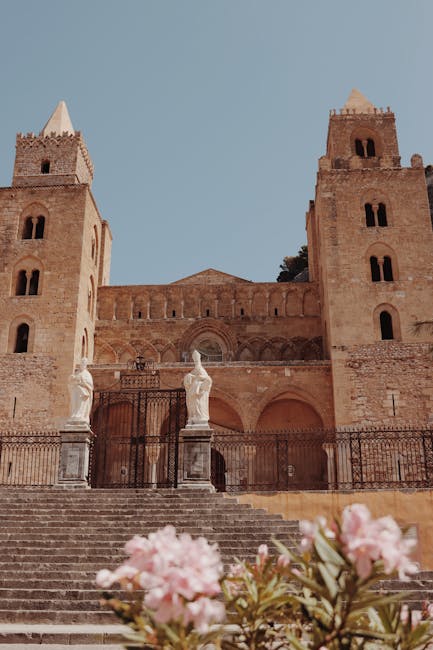
Practical tips: arrive early to avoid cruise-ship groups (high summer season can be very crowded); combine the visit with the climb up the Rocca for panoramic views over the cathedral and bay. For lunch, try Trattoria La Botte, Via Vittorio Emanuele 5 (check local listings for opening hours); lobster pasta or pasta con le sarde are classics. Don’t forget a bottle of water: summers can be very hot.
Cattedrale di Siracusa (Duomo di Siracusa): a Greek Temple Repurposed
Address: Piazza Duomo, 96100 Siracusa (Ortigia) SR
Opening hours: generally 9:00–19:00 (closings possible for ceremonies)
Price: church entry is free; visits to museum areas and the treasury €2–€5 depending on temporary exhibitions)
The Cattedrale di Siracusa stands on the island of Ortigia and rests on the ruins of an ancient Greek temple dedicated to Athena. Its ancient columns have been incorporated into the church walls, offering a unique archaeological spectacle: walking around the choir means literally touching Greek capitals. The visual impact is strong, with the Duomo square lined by Baroque palaces, cafés and gelaterias — a perfect place for strolling and relaxation. Inside, the mix of antique and Baroque elements creates an almost theatrical atmosphere.
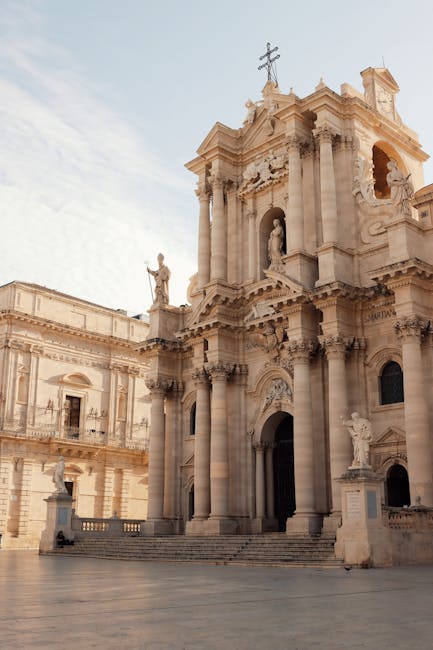
Tips: explore Ortigia on foot, and allow time for the local market (Mercato di Ortigia) to sample fresh produce and seafood specialties. Entrance to the Duomo is usually free but respect dress codes; to avoid crowds, opt for late afternoon. For a deeper visit, hire a local guide who can explain how the Greek temple was integrated and the successive transformations over the centuries.
Other Treasures: Messina, Catania and Off-the-Beaten-Path Routes
Sicily is full of other remarkable cathedrals worth stopping for depending on your route. Here are a few not to miss, with practical info and tips.
-
Duomo di Messina (Cattedrale di Messina)
Address: Largo XV Agosto, 98122 Messina ME
Hours: generally 8:00–18:00 (times subject to change); Price: free entry, some restored areas may charge (€2–€5).
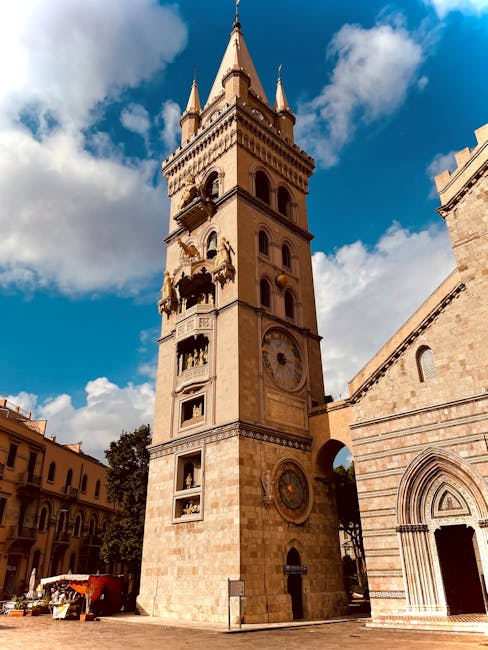
Description: famed for its bell tower and astronomical clock (one of the largest in the world) that performs every day at 12:00. The mechanical show is worth seeing; arrive about fifteen minutes early to secure a good spot on the Piazza del Duomo. -
Cattedrale di Sant’Agata, Catania (Duomo di Catania)
Address: Piazza Duomo, 95124 Catania CT
Hours: 7:30–12:30 and 16:00–19:30 generally; Price: free entry, museum and treasury may ask a small supplement (€3–€6).
Description: dedicated to Saint Agatha, the city’s patron saint, the cathedral sits at the heart of Catania opposite the Elephant Fountain. Its Baroque interior and the relics of the saint create a moving experience, especially during the winter festivals in February. -
Tips for less-crowded routes:
– Combine early-morning visits with late-afternoon sessions for amazing light and fewer people.
– Use regional trains to link Palermo, Cefalù, Messina and Catania: they’re economical and often scenic.
– For dining, seek out local osterie and trattorie rather than piazza-facing tourist restaurants; ask for the dish of the day for more authentic and budget-friendly fare.
Local Practical Tips: Preparing Your Visit, Respect and Best Times
Visiting Sicily’s cathedrals requires attention to practicalities as much as to artistic detail. Here are concrete recommendations to make the most of each stop:
- Dress and respect: bring modest clothing for access to liturgical areas (exposed shoulders or knees may be refused). Avoid large bags and loud behavior: many of these sites are still active places of worship.
- Tickets and hours: buy combined tickets when available (cathedral + cloister + museum). Hours can change for religious holidays; always check the official site or the cathedral’s Facebook page the day before your visit.
- Best times: early morning (8:00–10:00) for interior light and calm; late afternoon (16:00–19:00) for warm tones on façades. Avoid the lunch break (12:30–15:00) when many places may be closed.
- Guides and audioguides: prioritize a local guide to understand the historical layers (Norman, Arab, Byzantine). Audioguides are useful but often lighter on local anecdotes.
- Photography: respect restricted areas (certain chapels, ongoing masses). Use a wide-angle lens for ornate interiors, but watch the tricky light: HDR or bracketing can help.
- Transport: by car, park on the outskirts of historic centers; in larger towns, use buses and trams. Train links between Palermo, Cefalù, Taormina/Catania are convenient and often offer scenic views.
Conclusion: Why These Cathedrals Are Worth the Trip
Sicily’s cathedrals are more than monuments: they are open books of Mediterranean history, meeting places between sacred art and everyday life, and anchor points for understanding local identities. Visiting Cattedrale di Monreale confronts you with a wealth of mosaics that narrate Norman power and faith. In Palermo, the cathedral and the Cappella Palatina teach a lesson in hybrid architecture, where stone and gold converse with the city. Cefalù mixes maritime scenery with spirituality, while Siracusa astonishes with an ancient temple reworked into a Christian church. Messina and Catania, meanwhile, testify to cities reborn after earthquakes and reconstruction, offering living spectacles like the astronomical clock or the processions for Saint Agatha.
Beyond practical details (addresses, hours, prices), this guide invites a slow approach: give yourself time to observe, sit on a cloister bench, taste a local specialty in a small osteria, and leave with an image of a mosaic still shimmering in your memory. Sicily reveals itself in increments: a step into a cathedral, a conversation with a priest or guide, and the tasting of a traditional dessert. When planning your trip, consider seasons — spring and autumn bring mild weather and fewer crowds — and remember that some wonders are governed by religious timetables: respect them, and they will enrich your experience.
Finally, remember that each cathedral is a living place: there are masses, organ concerts, and sometimes temporary exhibitions. Check local programs to turn a visit into a memorable event, like attending a concert under a mosaic-lit choir or watching Messina’s clock in action. In short, bring comfortable shoes, a map, a camera and a curious heart — Sicily and its cathedrals will reward your curiosity with unforgettable sights, sounds and flavors.