




Introduction: Monreale’s Byzantine mosaics, a Sicilian treasure
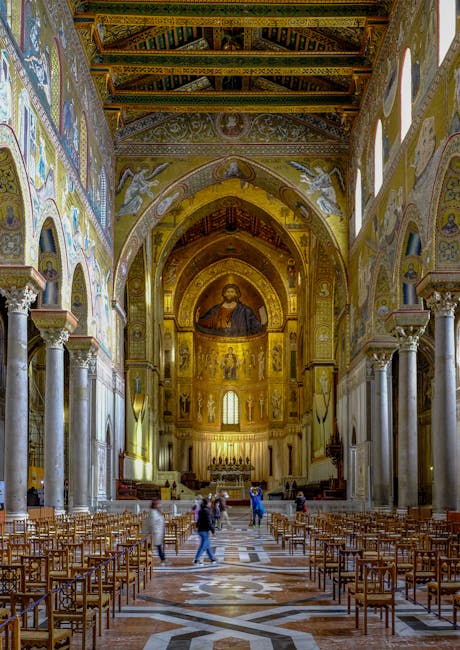
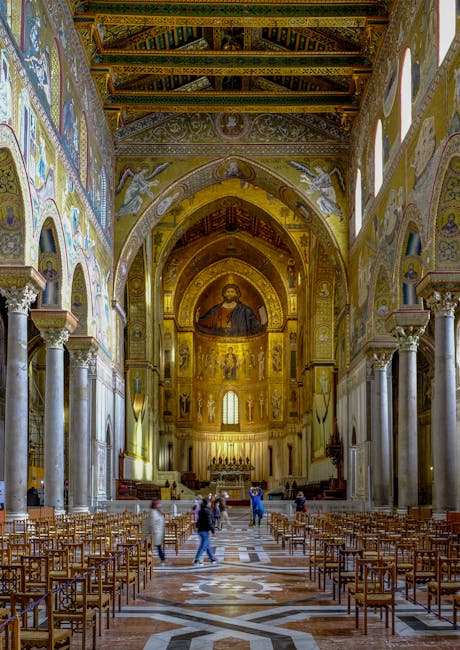
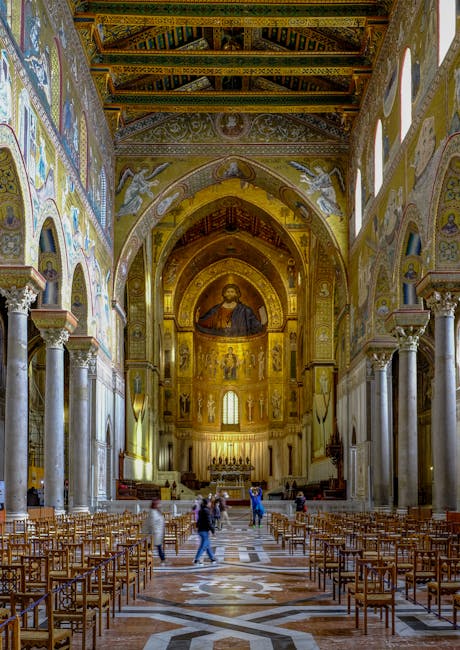
The Cathedral of Monreale, officially the Cattedrale di Santa Maria Nuova, is widely regarded as one of the finest examples of Byzantine art in Italy. Perched on the hills overlooking the Palermo plain, just a few kilometres from the Sicilian capital, Monreale immerses visitors in a unique sensory experience: a kaleidoscope of gold and colour where every biblical scene glows in the golden light of the mosaics. These mosaics cover the walls and apse of the cathedral and, in gleaming tesserae, retell episodes from the Old and New Testaments, bringing marble and stone to life with a theological and aesthetic intensity rarely matched.
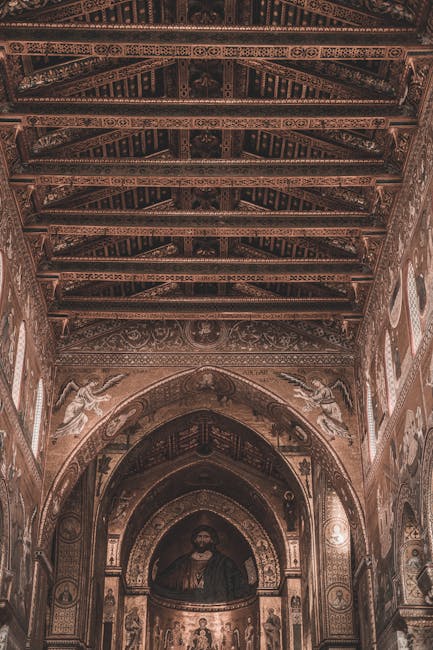
The story of this masterpiece begins in the 12th century under the Norman king William II of Sicily (Guglielmo II), who founded the building and commissioned its decoration. The work reflects the meeting of Norman, Byzantine, Arab and Latin influences that characterise medieval Sicily. The mosaics, likely made by Byzantine workshops or under Byzantine influence, spread over more than 6,000 square metres: a carpet of sacred images where biblical narrative becomes spectacle and the divine a nearly tangible presence.
Visiting Monreale is not just about looking at ancient images; it’s about experiencing the liturgical and symbolic function of Byzantine iconography. Each figure, pose and gesture follows a theological code: proportions, hierarchies of scale, and the way light is represented through gold tesserae. The result is an architecture of faith in which the sacred space is saturated with meaning and splendour. The mosaics strike you as soon as you enter: the Last Judgment, the life of Christ, saints and prophets seem to surround you and invite quiet reflection.
This general guide aims to accompany the curious and discerning visitor: detailed descriptions of the site, exact addresses, practical opening times and ticket prices to plan your visit, recommendations for the best viewpoints, local tips to avoid crowds, and logistical suggestions on getting to Monreale from Palermo or exploring the whole complex. We’ll also cover the adjoining Benedictine cloister — the Chiostro dei Benedettini — whose carved columns and gardens complete the visual and contemplative experience. Finally, you’ll find practical photography tips, advice on respecting the site, and suggested routes to extend your visit into the village of Monreale, known for its narrow lanes, panoramic viewpoints and authentic Sicilian dining.
Whether you’re an art lover, pilgrim, photographer, historian or simply a traveller in search of beauty, Monreale promises a powerful encounter with Byzantine heritage. This guide gives precise information (addresses, opening hours, prices) and tried-and-true local tips to make the most of this sacred place. Prepare to look up and to stand still for a long time: the Byzantine mosaics of Monreale demand time and contemplation — they tell centuries of history and still shine, intact, in the heart of Sicily.
1) Monreale Cathedral: detailed description and visit route
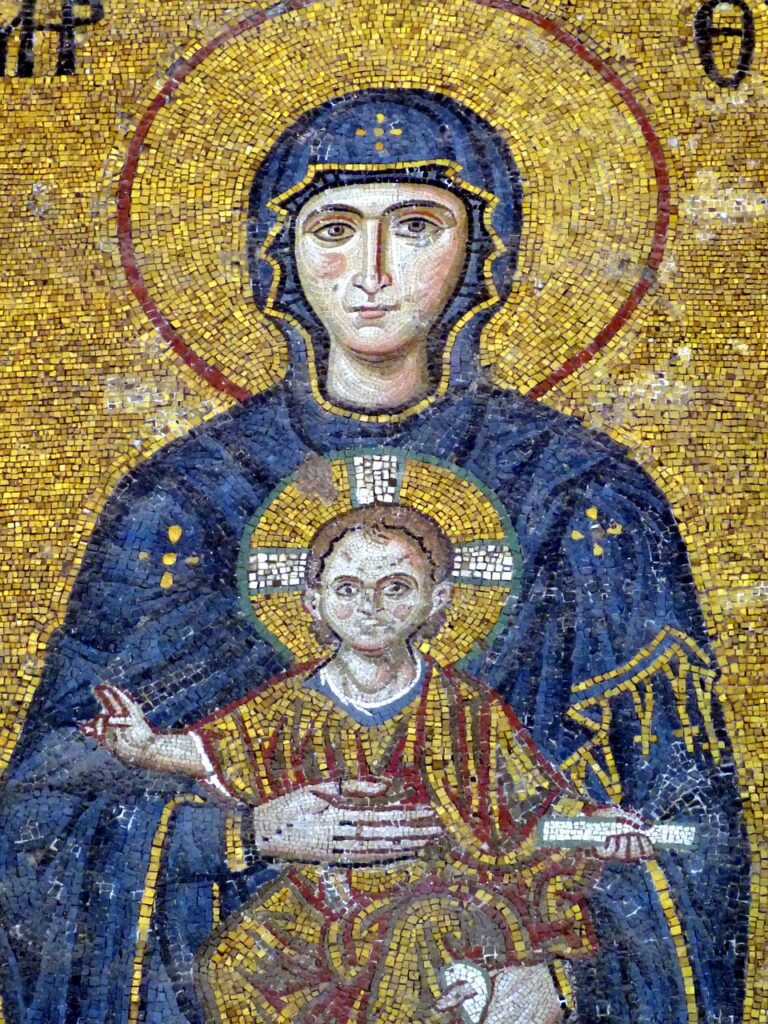
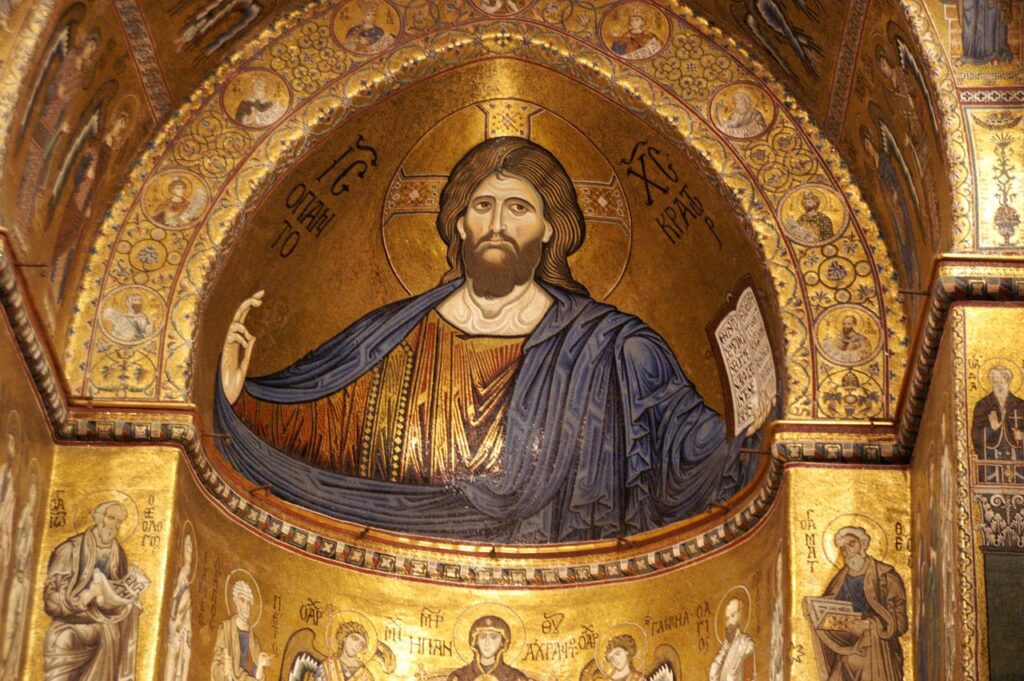
The Cattedrale di Santa Maria Nuova di Monreale is located at: Piazza Guglielmo II, 1, 90046 Monreale PA, Italy. Founded in 1174 by King William II, the building presents a sober façade and an interior lavishly decorated. Inside, the golden mosaics cover nearly all the walls up to the vault: scenes from the New Testament, episodes from the life of Christ, the Christ Pantocrator in the central apse, Old Testament narratives and hagiographical figures. The narrative layout follows a chronological and liturgical logic: the ensemble serves both to teach and to lift the faithful spiritually.
Recommended visit length: allow 60 to 90 minutes to admire carefully the main mosaics (apse, nave, side chapels) and to grasp their iconographic meaning. Suggested stopping points include the apse (home to the Christ Pantocrator), the sequence of panels illustrating Genesis, the life of Jesus and the apostles, as well as the scenes of the Last Judgment. The mosaics are often best lit in the morning when natural light enters the building and reveals the subtlety of the gold.
Access and regulations: the main entrance is on Piazza Guglielmo II. Respect for liturgical rules is essential: some areas may be reserved for religious services. Modest clothing is requested: shoulders and knees should be covered. Photography is generally allowed without flash, but check the information signs at the entrance as rules can change for liturgical events.
Typical ticket prices (indicative, subject to change): combined ticket Cathedral + Chiostro dei Benedettini + Museo del Tesoro (if accessible): around €8.00 for a full-price ticket. Reduced price (students, seniors, groups with proof): around €6.00. Single-entry to the cathedral (when available separately): approximately €3.00–€5.00. Official prices are posted at the ticket office: it’s recommended to buy the combined ticket to access the cloister and the diocesan museum next door.
Opening hours (indicative — check before you go): generally 9:00–17:00 (winter) and 9:00–18:00 (summer). Hours may be extended during high season (May to September); closures are possible during religious celebrations and local festivals. Religious services follow parish schedules: Sunday mass in the morning and sometimes in the evening. For a quieter visit, favour the first hour of opening on weekdays.
2) The Benedictine cloister (Chiostro dei Benedettini): architecture, sculptures and atmosphere
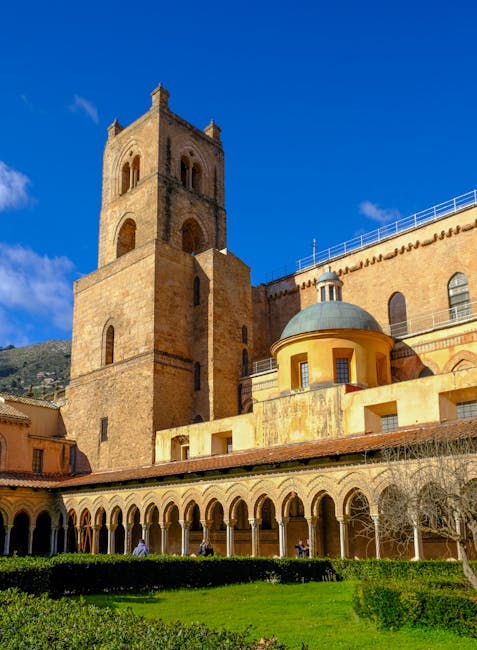
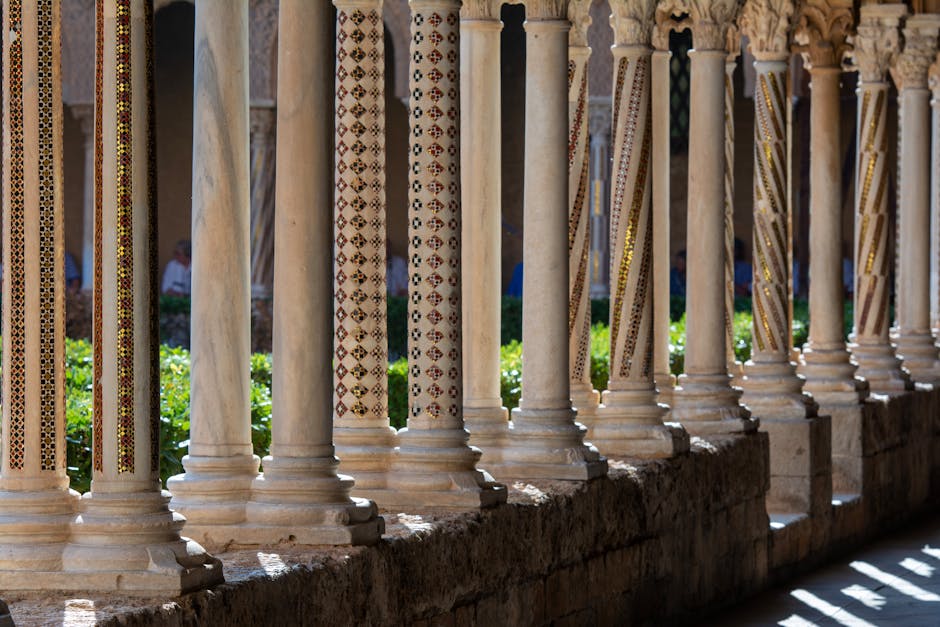
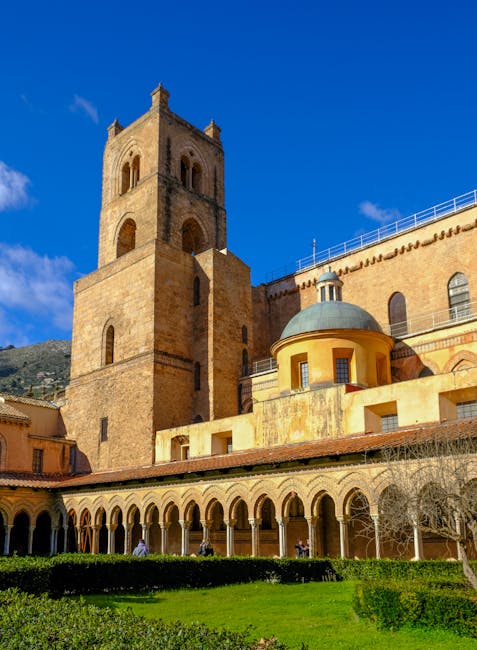
Right next to the cathedral, the Chiostro dei Benedettini (Cloister of the Benedictine Abbey) is an integral part of the monastic complex. Address: Piazza Guglielmo II, 1, 90046 Monreale PA, Italy (same complex). Built at the same time as the cathedral, the cloister is a splendid example of medieval stylistic fusion: marble columns carved with fine capitals, round arches, and a central garden that once offered monks a place for contemplation.
The cloister consists of 228 paired columns, each decorated with different motifs — animals, vegetation, human figures, geometric patterns — probably the work of local workshops influenced by Islamic and Byzantine art. The result is a stone labyrinth where repetition and variation create a visual melody. The capitals display sculptural virtuosity: meticulous naturalistic details, grotesque masks and symbolic compositions.
Visiting and points of interest: start in the peristyle to study the variety of capitals; stroll slowly around the central garden to enjoy the interplay of shadow and light on the marble. The cloister also offers striking photographic compositions framing the cathedral and the mosaics visible in the distance. It’s generally quieter than the nave — an ideal place for a reflective pause after admiring the mosaics.
Tickets and access: the cloister is included in the combined ticket (≈ €8.00 full price / ≈ €6.00 reduced). Hours usually match the cathedral’s (9:00–17:00/18:00), but access may be limited during services or conservation work. For groups, specialised guided tours of the cloister can be arranged through the local tourist office: expect an extra fee for a private guide (often €50–€100 depending on duration and language).
Practical tips: if you want the most flattering light for photographing the columns, visit the cloister in the late afternoon when shadows carve out the reliefs. Respect the sacred nature of the site: no access to interior lawns, keep voices low, and do not touch fragile sculptures. Finally, the cloister is a perfect starting point for ascending to the panoramic terrace that overlooks Palermo — don’t miss it for memorable coastal views.
3) The Diocesan Museum and the cathedral treasury: objects, metalwork and explanatory displays
Within the episcopal complex is the Museo Diocesano di Monreale (Diocesan Museum of Monreale). Address: Piazza Guglielmo II, 1, 90046 Monreale PA, Italy — access is often via the cloister or a dedicated entrance on the square. The museum houses liturgical objects, medieval metalwork, illuminated manuscripts and architectural fragments that help contextualise the mosaics and monastic life in the Middle Ages.
Notable pieces include chalices, reliquaries, embroidered textiles and Norman metalwork; some objects come from royal donations and testify to the material wealth accumulated by the church in the Norman era. Informative panels and scale models help visitors understand the origin of the tesserae, mosaic-laying techniques and recent restoration efforts.
Admission and opening times: the Museo Diocesano is generally included in the combined Cathedral + Cloister + Museum ticket (≈ €8.00 full price / ≈ €6.00 reduced). The museum follows the complex’s opening hours, with possible reductions outside high season. Some temporary exhibitions may have separate charges; check the notices at the ticket office.
A visit to the museum is particularly useful for those who want to dive deeper into mosaic techniques: see glass tesserae up close, mortar layers, and modern restoration interventions. Audioguides and multilingual panels (Italian, English, sometimes French) provide informed context. For families, the museum often offers educational sheets for children, making the visit more accessible.
4) When to go, photographing tips and how to avoid the crowds
Picking the right time to visit Monreale makes a big difference. High season (May to September) draws more visitors, especially half-day excursions from Palermo. For a quieter experience, favour the low season (November to March) or weekdays outside school holidays. The first opening hour (9:00–10:30) and the last hour before closing often provide soft light and fewer people. Avoid the middle of the day at weekends.
Photography: the golden richness of the mosaics requires some adjustments. Flash is usually prohibited — it damages tesserae over time. Use fast lenses (f/2.8 or wider), a moderate ISO to limit motion blur, and a compact tripod only if authorised (tripods are often banned); otherwise, steady yourself on benches to stabilise shots. Fine details pop when natural light hits from the side: morning light for the apse, late afternoon for the side aisles.
Visitor tip: start with the cathedral, then the cloister, and finish at the museum. Official guided tours (bookable on site or online) deepen the historical understanding but can limit photographic flexibility. If you want a concise explanation without a private guide, opt for an audioguide if available (usually for a small fee).
Accessibility: the cathedral is reachable from the main square, but some areas may have steps and old thresholds. Visitors with reduced mobility should enquire in advance: adapted access exists but can be limited. Wear comfortable shoes; mosaic and marble floors can be slippery.
5) Getting to Monreale from Palermo and practical tips (parking, food, local prices)
Monreale lies about 8–10 km southwest of Palermo city centre. Handy GPS address: Piazza Guglielmo II, 1, 90046 Monreale PA, Italy. Ways to get there:
- Car: from Palermo, take the SS186 or SP69 depending on your starting point; journey time around 20–30 minutes. Parking: the main piazza and surrounding streets offer limited paid and free spaces. There are also paid parking lots nearby (rates vary by season). Arrive early to find a spot close to the cathedral.
- Bus: several lines link Palermo to Monreale. AST / AMAT buses (line 389/389A depending on season and timetable) run from Palermo (for example Piazza Indipendenza or Via Roma) and stop at Monreale (Piazza Guglielmo II). One-way fare roughly €1.50–€3.00. Check local timetables at the AMAT office in Palermo or on official transport websites.
- Taxi / transfer: taxi ride from Palermo takes about 20–35 minutes; fare approximately €25–€40 depending on pickup point and traffic. Ride-hailing services or private transfers can be booked (prices vary).
- Organised excursions: many agencies in Palermo offer half-day tours including transport and a guide (expect €30–€60 per person depending on group size and language).
Food and breaks: the area around the cathedral and Via Matteo Bonello offers several dining options. Recommended spots:
- Ristorante La Rusticana — Via Roma, 34, 90046 Monreale PA, Italy. Traditional Sicilian cooking, pasta dishes and local antipasti. Main courses typically €10–€18.
- Trattoria Pizzeria da Salvo — Via Pier Luigi Nervi, 2, 90046 Monreale PA, Italy. Pizzas, meat and fish dishes; generous portions. Average price: €8–€15 per dish.
- Bar Solferino — Piazza Vittorio Emanuele, coffee and local pastries, perfect for an espresso and a cannolo (prices: €1–€3).
Local tips: try Sicilian specialties after your visit like arancini, panelle and cannoli. In summer, bring a bottle of water and a hat; while the cathedral interior is pleasantly cool, the outside can be hot. For souvenirs, look for local craft workshops offering mosaic reproductions or tesserae-based pieces — often more authentic than mass-produced tourist items.
Conclusion: Why Monreale’s mosaics are worth your visit
Monreale’s Byzantine mosaics represent a remarkable synthesis of art, faith and history that transcends mere tourist interest. They invite contemplation: each panel, figure and glint of gold offers a renewed reading of biblical narrative and Western memory. Visiting Monreale places you at the crossroads of Norman, Byzantine, Arab and Latin influences — a microcosm of medieval Sicily that absorbed and elevated those legacies into a harmonious whole.
Practically speaking, the visit is accessible: precise address (Piazza Guglielmo II, 1, 90046 Monreale PA, Italy), affordable combined tickets (≈ €8.00 full price / ≈ €6.00 reduced), and opening hours suited to tourists (usually 9:00–17:00/18:00 depending on season). The adjoining cloister and diocesan museum deepen the technical and spiritual understanding of the site, while the proximity to Palermo makes organising the excursion easy by car or bus.
Keep these practical tips in mind: choose quiet hours to better appreciate the mosaics, respect rules of silence and dress, avoid flash photography, and pair the visit with a meal in a local trattoria to taste authentic Sicily. Above all, take your time: Monreale can’t be understood at a glance. The mosaics demand prolonged observation for their symbolic richness and technical mastery to reveal themselves. Even for a rushed visitor, a few moments before the apse or in the cloister often leave a lasting impression.
Leaving Monreale, you’ll take home more than pictures — you’ll carry the feeling of having crossed a space where art acted as a bridge to the sacred. Whether you’re a history buff, an art enthusiast or a traveller seeking emotion, Monreale’s Byzantine mosaics will offer a memorable experience set in the luminous, contrasting landscape of Sicily.