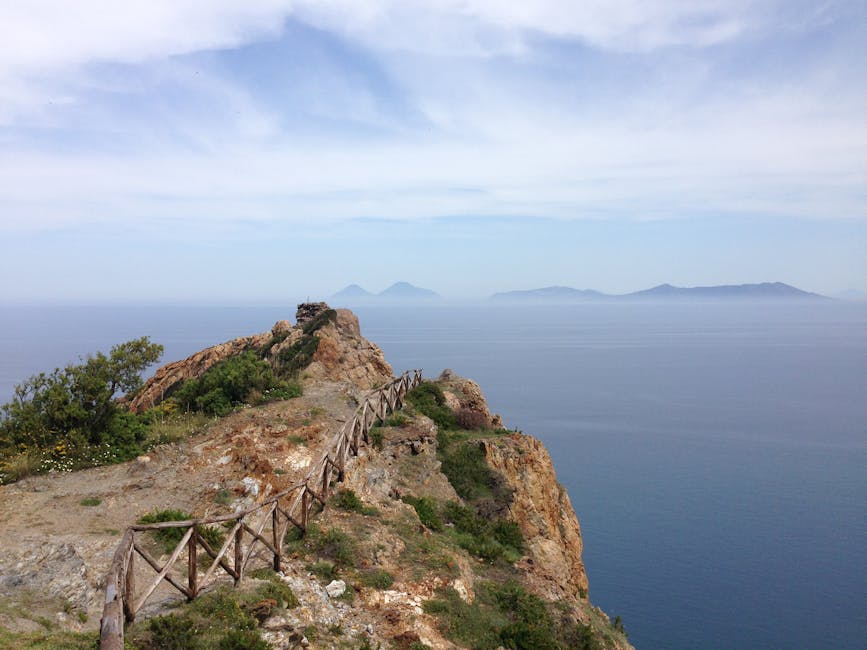






Introduction: The Aeolian Islands From Above — a Call to Aerial Photographers
The Aeolian Islands, or Isole Eolie, are a volcanic archipelago off Sicily’s northern coast. Made up of seven main islands — Lipari, Salina, Vulcano, Stromboli, Filicudi, Alicudi and Panarea — they deliver striking contrasts: black cliffs, turquoise seas, whitewashed villages and steaming craters. Capturing these scenes from the air turns already dramatic views into graphic compositions: the patterned olive terraces of Salina, the dark lava trail of Stromboli’s Sciara del Fuoco, or the plumes of steam at Vulcano become storytelling elements when seen from above.
This guide is written for traveling photographers hunting aerial spots — whether you fly a compact drone, a professional multicopter or use a gimbal-equipped hybrid from high vantage points (viewpoints, summits, cliffs). We outline precise locations, useful addresses, recommended times, and practical info (prices, local rules, permits and technical tips). The aim is to let you plan your shots: know where to set up, when the light flatters the landscape, how to handle wind and tide, and which regulatory boundaries not to cross so you don’t ruin your trip.
Beyond technical and logistical matters, we offer an immersive read: picture yourself at sunrise on the rim of Vulcano’s Gran Cratello, listening to the gurgle of sulfur bubbles, or flying over Stromboli’s Sciara del Fuoco at sunset as old lava flows catch orange highlights. Each island has its own photographic personality and microclimate — the maestrale can blow hard in the afternoon, morning mist is common on Salina, while Panarea keeps a chic Mediterranean vibe perfect for lifestyle aerial frames.
We also cover legal points: in Italy drone flights are regulated by ENAC (Ente Nazionale Aviazione Civile), along with local restrictions and P-zones (airfields) or no-fly areas around protected installations. You’ll learn when to request permission from the Capitaneria di Porto (harbormaster) or the Comune, and how to minimize disturbance to wildlife and residents. At the end of each section we add practical tips — ferry routes, parking, cafés to recharge batteries and booking hacks — so your aerial photo session runs smoothly.
Getting Around and Rules for Aerial Shooting
Before you take off, a few logistical basics. The Aeolian Islands are connected to each other and to Sicily by hydrofoils (aliscafo) and ferries. Main access points from Sicily are the ports of Milazzo (Porto di Milazzo), Messina and, in low season, sometimes Palermo. For example:
- Porto di Milazzo – Piazza Mazzini, 1, 98057 Milazzo ME. Companies like Liberty Lines and Siremar operate here. Typical fares: hydrofoil Milazzo–Lipari ~1h15, €12–20 one-way depending on season. Schedules: variable, generally 06:00–20:00 in summer, reduced in winter.
- Porto di Lipari (Marina Corta) – Marina Corta, 98055 Lipari ME. This is often the first stop. The main quay gives walking access to the historic center.
Drone rules (practical summary):
- ENAC regulations: respect airspace class, visual line of sight (VLOS) flights, altitude limits (usually 120 m unless exempted), no overflight of people or gatherings, and privacy rules.
- Maritime zones and ports: the Capitaneria di Porto can forbid flights over ports and navigation areas. Contact the local Capitaneria (for example Capitaneria di Porto di Lipari) before operating within a port radius.
- Protected sites: some natural areas are protected and may require authorization from the Parco Nazionale delle Isole Eolie (check with the island Comune).
- Insurance: mandatory for professional flights. For hobby pilots, liability insurance is highly recommended.
Practical tips for aerial photography:
- Check the weather (wind, visibility) the day before and one hour before takeoff. The maestrale (north-west wind) can blow strongly and make flights unstable.
- Favor golden hours (sunrise and sunset): crisp outlines, natural contrast, reflections on the water. The sea’s deep blue often looks richer in the morning.
- Bring spare batteries, ND filters for long exposures and a local SIM card if your drone requires cellular signal.
- Respect locals: avoid filming crowded beaches and private property without permission.
Useful contact:
- Capitaneria di Porto di Lipari – Via del Castello, 98055 Lipari ME. Phone: +39 090 988 1234 (check the local number before departure). Hours: generally 08:00–20:00 in summer.
Preparatory image
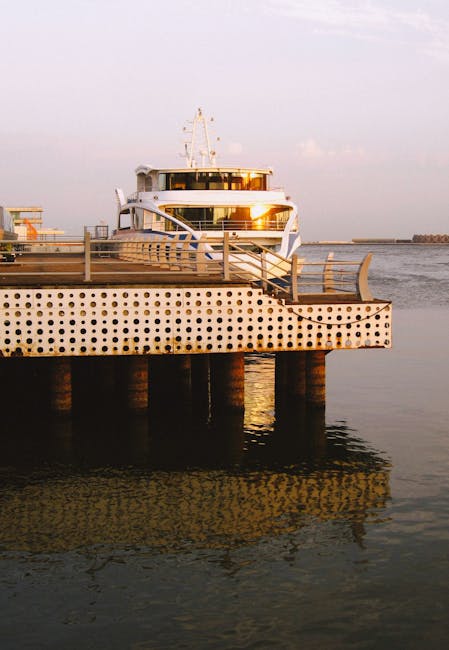
Vulcano: Gran Cratello, Porto del Levante and the Black Beaches
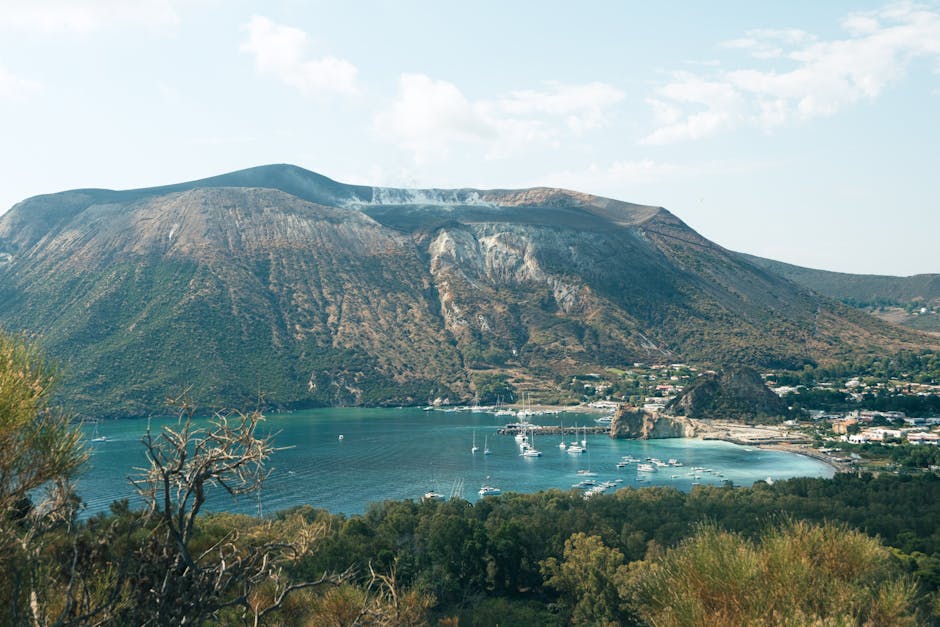
Vulcano, the closest island to Sicily, is famous for its sulfur mud baths and its imposing crater, Gran Cratello. For aerial shots, the summit of Gran Cratello offers a 360° panorama over the Strait of Messina, Lipari and the trademark steam vents. The trail to the crater starts near Porto di Levante (Vulcano Porto):
- Start point: Porto di Vulcano, 98050 Vulcano Porto ME (near Piazza Villamarina).
- Hike: sentiero Gran Cratello, about 30–45 minutes to the crater rim, moderate difficulty. Recommended time: sunrise for soft colors and fewer hikers.
- Cost: the ascent is free; access to the natural site is open, but parking and boat transfers vary (hydrofoil Milazzo–Vulcano about €15–25 one-way depending on season).
From the air, capture:
- The dark caldera with its gradients of rock and sulfur tones.
- The black sand beaches of Porto di Levante and Spiaggia delle Sabbie Nere, providing strong contrast with emerald water.
- The steam plumes near the Fossa di Vulcano for dramatic monochrome shots.
Technical tips:
- Keep a safe distance from the crater and avoid flying directly over fumaroles to protect your gear from corrosive gases.
- At sunrise, use a fast shutter speed to freeze wind-blown black sand, or an ND filter to smooth the sea if you’re allowed to fly low over the water.
- Recommended launch sites: Gelso Beach (Spiaggia di Gelso) for frontal compositions, or the hill above Porto di Levante for a plunging perspective.
Services and amenities:
- Terme e Bagni Vulcano (mud baths) – Località Acque Calde, 98050 Vulcano Porto ME. Hours: typically 09:00–19:00. Treatments: from €10 (public baths) to €40 (guided treatments).
- Bars and restaurants around Piazza Villamarina open early (cafés from 07:30). Bring water and snacks for the hike.
Image angles:
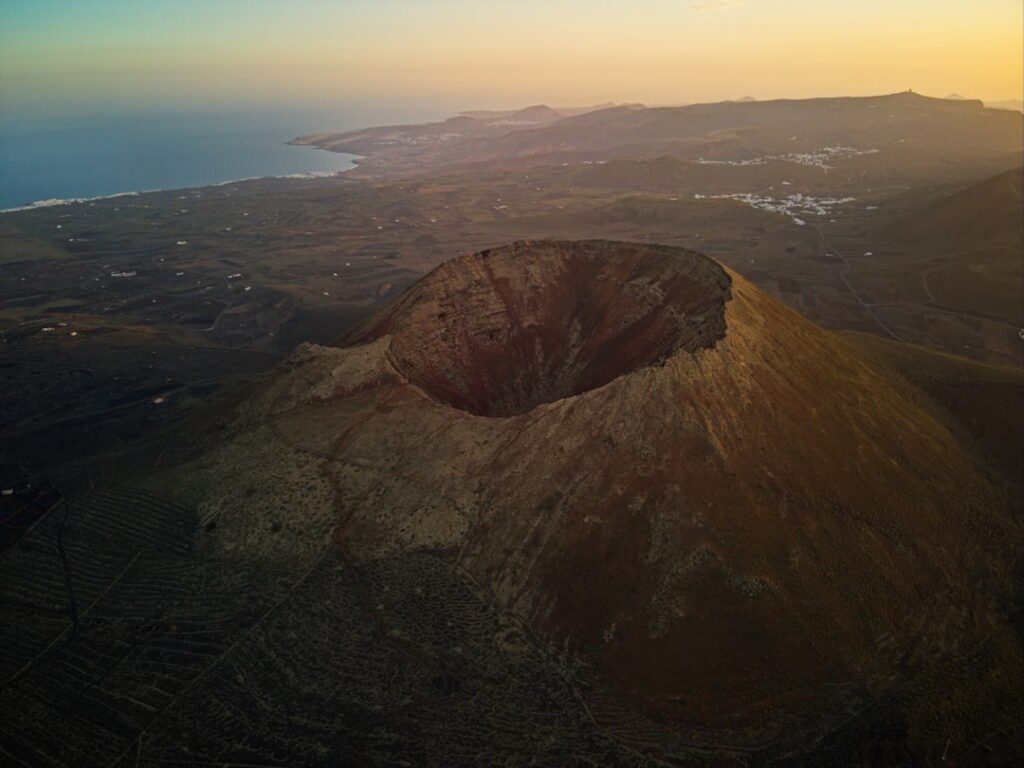
Stromboli: Sciara del Fuoco, San Vincenzo Village and Night Views
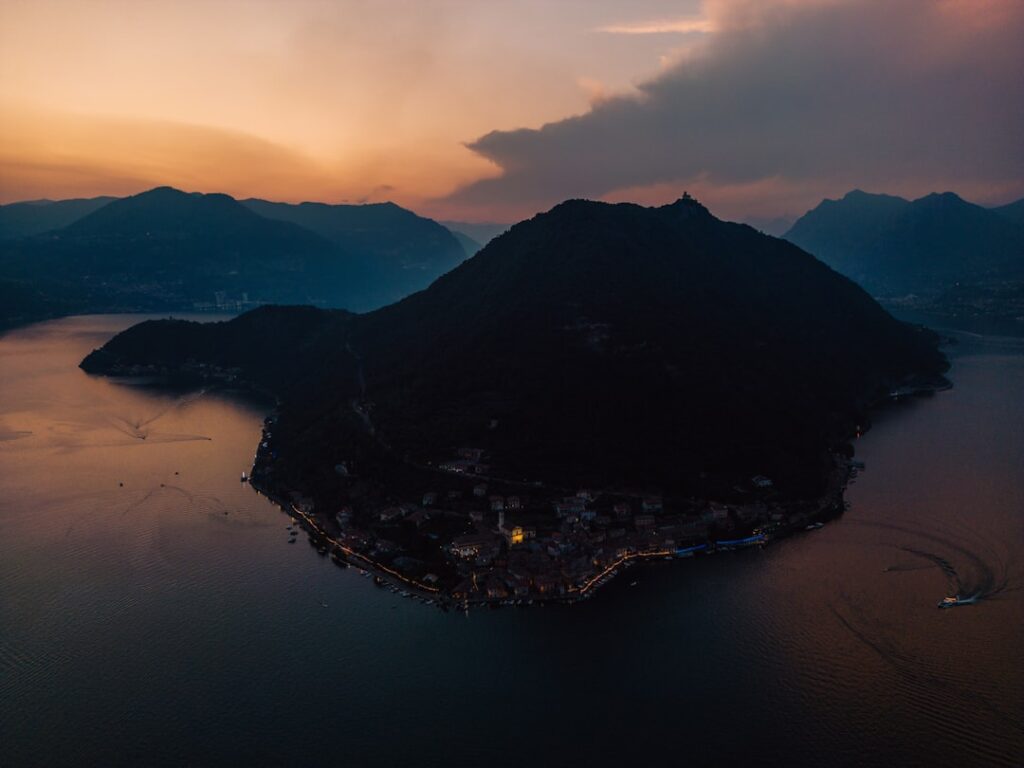
Stromboli is the quintessential living volcano: its regular dark eruptions create unique photo opportunities, especially from the Sciara del Fuoco and the viewpoints on the northern slope. The main port is Porto di Stromboli:
- Port address: Porto di Stromboli, 98050 Stromboli ME. Boat access from Lipari about 25–40 minutes, €10–25 depending on season and vessel type.
- Trail to the Osservatorio: several local operators (a guide is often mandatory if you climb toward the active summit) offer crater excursions. Guided ascents are recommended and sometimes compulsory for safety — guide fees typically €30–60 per person depending on duration and equipment.
Main aerial spot: the Sciara del Fuoco, the black lava channel that runs from the crater to the sea. Flights directly over the Sciara are often tightly controlled due to volcanic risk and tourist numbers. Practical workarounds: shoot from a permitted boat at dusk (photos taken from a vessel) or from an accessible promontory using a drone only if local authorization is granted.
Night photography tips:
- Shoot volcanic explosions with a telephoto lens from the village of San Vincenzo (via San Vincenzo area) or from a secured boat: wide aperture, ISO adjusted (800–3200) and a sturdy tripod for long exposures are essential.
- Night drone flights are generally restricted by ENAC (most regulations prohibit VLOS-less or permissionless night operations) — it’s safer to capture night scenes from the ground rather than risk a violation.
Services and safety:
- Posto di Polizia di Stromboli – Via San Vincenzo, 98050 Stromboli ME. In case of volcanic emergency, follow local directives and official guides.
- Local pharmacy and small convenience stores at the lower village, open in season; reduced service off-season.
Suggestive image:
Panarea and Basiluzzo: Cliffs, White Houses and Crystal Waters
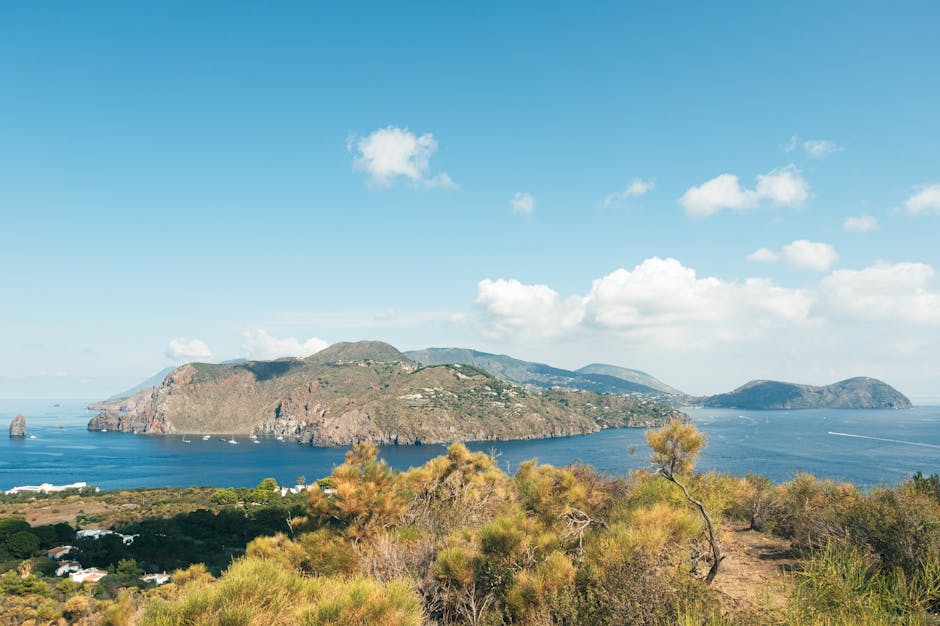
Panarea is the chicest of the Aeolians: narrow lanes, whitewashed houses, small coves and moored yachts. For an aerial photographer, the contrast between buildings, volcanic rock and translucent water is a feast. The main port is Porto di Panarea:
- Address: Porto di Panarea, 98050 Panarea ME. Accessible by hydrofoil from Lipari or Milazzo. Hydrofoil fares Lipari–Panarea €10–20 one-way depending on season.
- Spots to fly over: Cala Junco (historic cove), Calajunco bay, and the islet of Basiluzzo for minimalist compositions of rock versus water.
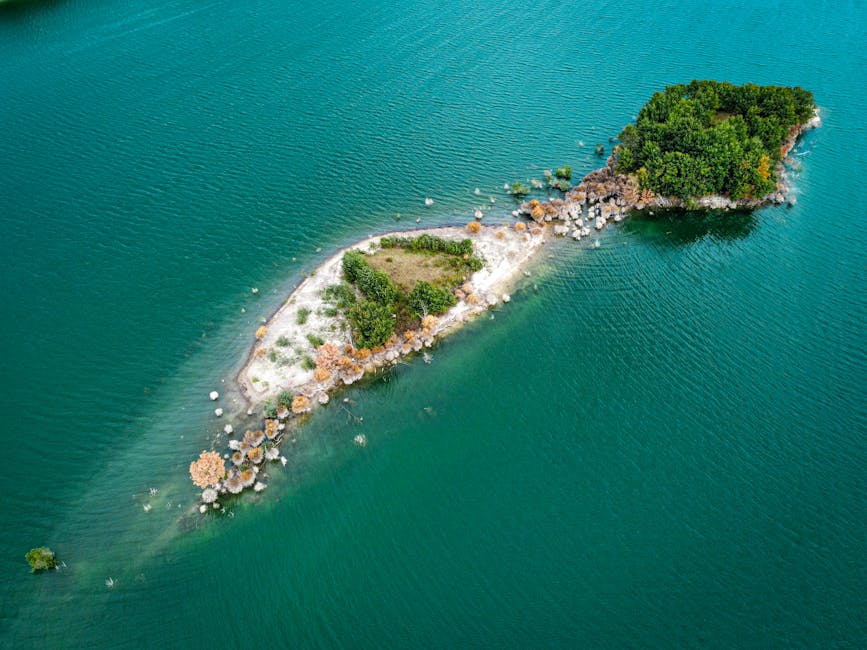
Cala Junco is a small sheltered bay ringed by low cliffs and Mediterranean scrub. From above, you can read the different blues and see shallow seabeds — perfect for top-down shots. Basiluzzo and Bottaro are neighboring islets whose convex shapes and natural pools form graphic patterns against anchored boats.
Practical tips:
- Panarea gets very busy in summer. Plan an early-morning flight to avoid boat traffic and catch calm water.
- To launch discreetly, choose spots away from private residences and avoid flying over people and anchored yachts.
- Restaurants and bars: La Sirenetta (Via Marina, Panarea) opens in the morning for coffee and lunch; a handy spot to recharge batteries and grab a meal between sessions.
Image markers:
Salina and Lipari: Panoramas, Marinas and Historic Sites
Salina and Lipari present two complementary aerial palettes. Salina, greener, is known for terraced caper and vine fields; Lipari, the archipelago’s largest island, blends busy ports, beaches and archaeological sites. Useful reference points to prepare your captures:
Salina:
- Santa Marina Salina (main port) – Via Roma 44, 98050 Santa Marina Salina ME. Port hours: arrivals/departures according to ferry schedules; ticket offices open early in summer.
- Punta Lingua – famous lighthouse and the Cala Junco bridge. Great for silhouette compositions at sunset.
- Fares: hydrofoil Lipari–Santa Marina Salina ~€6–12 one-way; Milazzo to Salina via Lipari often €20–35 depending on route and season.
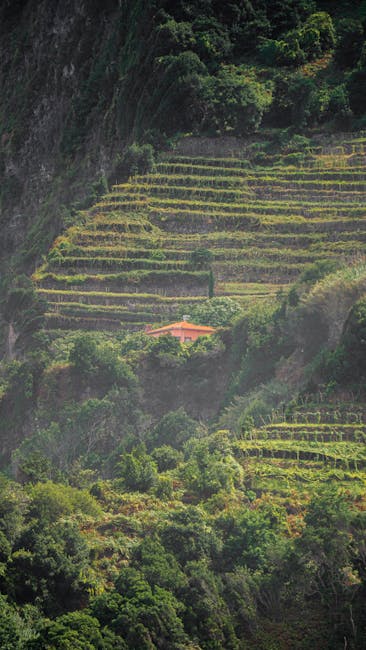
Over Salina, fly over the agricultural terraces (vines and capers) around Malfa to capture repeating lines and rich textures. The salt pans near Lingua form reflecting rectangles that work well for minimalist compositions.
Lipari:
- Castello di Lipari and Museo Archeologico Eoliano – Via Roma, Castello, 98055 Lipari ME. Hours: archaeological museum often open 09:00–19:00 (seasonal — check ahead). Museum entry: €5–8.
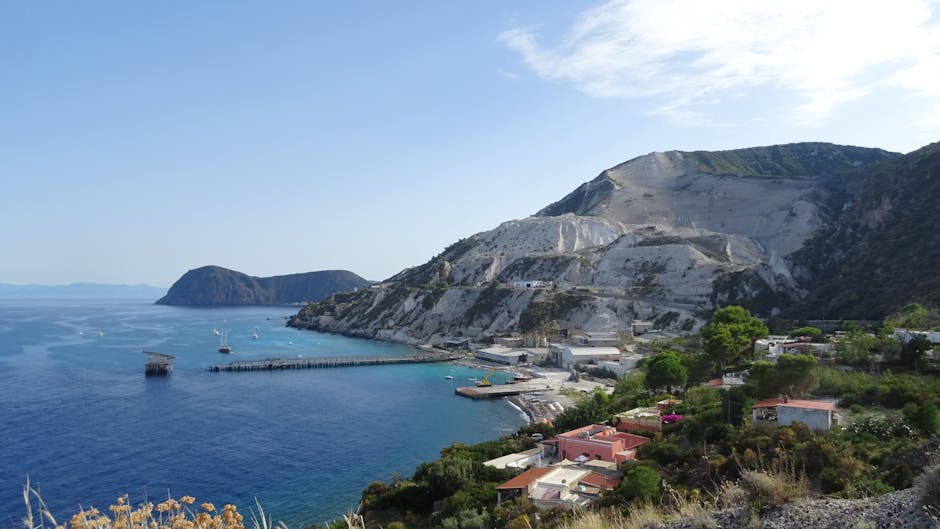
- Marina Corta – Marina Corta, 98055 Lipari ME. Historic port and starting point for hikes to Monte Guardia and several viewpoints.
From the air, Castello di Lipari (with the Museo Eoliano inside) is striking: quaint alleys, the Cathedral of San Bartolomeo (Piazza del Popolo, 98055 Lipari ME) and the ramparts create photogenic urban patterns. The contrast between the perched historic center and the Marina Corta below looks especially good in raking light.
Practical tips:
- Museums and historic sites often enforce drone-free zones — prefer shots from authorized headlands or from the sea with a permitted boat.
- Charging and gear: Lipari has several small electronics shops and cafés open early; bring a multi-charger to top up multiple batteries at once.
- Accommodation: book ahead in high season (July–August); Lipari rates roughly €60–200 per night depending on comfort level.
Image markers:
Detailed Local Tips and a 3-Day Photo Itinerary
Here’s a practical three-day photo itinerary optimized for aerial shooting while respecting regulations and the island pace:
Day 1 — Lipari & Panarea:
- Morning: arrive at Marina Corta, Lipari (Marina Corta, 98055 Lipari ME). Settle in, check weather and handle any formalities with the Capitaneria if needed.
- Midday: cross to Panarea (hydrofoil 25–40 minutes, €10–20). Launch early at Cala Junco; fly while the water is calm.
- Evening: return to Lipari, shoot sunset at Castello di Lipari. Recharge batteries and pack your tripod.
Day 2 — Salina:
- Morning: ferry to Santa Marina Salina (Via Roma 44). Photograph terraces and the Lingua salt pans at sunrise.
- Afternoon: taste local products (capers, Malvasia wine) — great for culinary and lifestyle shots.
- Evening: sunset at Punta Lingua; silhouette compositions with the lighthouse and the bridge.
Day 3 — Vulcano & Stromboli:
- Morning: early departure to Vulcano Porto (Gelso, Gran Cratello trail). Capture sunrise shots at the crater.
- Afternoon: transfer to Stromboli (check for direct ferries). Prepare for a dusk session: views of the Sciara del Fuoco (observe mandatory safety rules). No night flights without permits.
Extra tips:
- Book boat tickets in advance, especially in July–August. Main operators: Liberty Lines, Siremar, N.G.I. Check schedules and fares the day before.
- Charge all batteries in the evening at cafés or hotels (ask if there’s a dedicated power outlet for packs).
- Carry both paper and digital copies of drone permits, insurance and Capitanerie contacts to show if asked.
Evocative image:
Conclusion: Respect, Creativity and Safety for Unforgettable Images
Shooting the Aeolian Islands from the air mixes aesthetic wonder with responsibility. The islands deliver an extraordinary range of motifs — from solidified magma to terraced gardens, white lanes to turquoise coves — but they’re also inhabited and fragile places. Before planning your sessions, check with local authorities (Capitaneria di Porto, Comuni) and the Parco Nazionale delle Isole Eolie if needed. Follow ENAC rules for flights and prioritize safety: don’t fly over people, watch for maestrale winds and never overfly active volcanic zones without professional authorization.
On the creative side, aim for the golden light of morning or evening, vary your altitude to alternate top-down and low-angled shots, and use natural lines (terraces, lava flows, cliffs) to build strong compositions. Think narratively: pair wide aerials with ground-level details (stone, vegetation, boats) to tell the island’s story through a cohesive image series.
Finally, adopt a responsible traveler mindset: inform your clients or companions about fragile ecosystems, avoid disturbing local wildlife (seabirds, nesting areas) and support the local economy (book local guides, rent boats from registered operators, dine at family-run trattorie). With preparation, respect for rules and a good eye, your aerial images of the Aeolian Islands can become powerful visual records — modern postcards of an archipelago that has kept its wild and glamorous character.